
She Wanted Nothing to Do With the Catholic Church Until She Learned What It Actually Taught |
Kimberly Hahn felt her husband's conversion as a betrayal. Four years later, she was received into the Church herself. |
Milwaukee, the spring of 1986.
Ten days before Easter, Kimberly Hahn's husband sat down with her to deliver the news she had dreaded for years.
Scott had been slipping into a small basement chapel to watch daily Mass.
Just watching.
Never receiving.
And he had fallen in love with the Eucharist.
He wanted to become Catholic, and he wanted to do it that Easter.
Less than a year earlier, he had assured her he would wait at least four years before taking such a step.
Now he was asking her to release him from that promise, because he believed refusing would mean sinning against the truth he had found.
Kimberly agreed.
But her heart was breaking.
As Scott walked out the door, he picked up a set of rosary beads.
Kimberly turned to her prayer journal and poured out her frustration to God.
Years later she told the National Catholic Register what she wrote: "Lord, who can I go to? And don't tell me Mary and the saints!"
A Pastor's Daughter With a Plan
Kimberly Kirk grew up as the daughter of a Presbyterian pastor, and as a girl she wanted to be just like her father.
Her faith was real, warm and alive.
At Grove City College in Pennsylvania, she met a passionate young man named Scott Hahn while working beside him in an outreach ministry to teenagers.
They fell in love, married in 1979, and both went on to study at Gordon-Conwell Theological Seminary.
Her dream was clear: marry a pastor and build a life of ministry beside him.
Scott, at the time, was openly hostile to Catholicism.
Following the old Reformed confessions, he believed the pope was the antichrist.
Kimberly was gentler.
She allowed that Catholics could be Christians, but she could not imagine why anyone would actually want to be one.
The Question That Cracked the Door
Here is the irony of the story.
One of the first cracks in their Protestant certainty came from Kimberly herself.
In seminary, she began researching contraception, a topic Scott first considered not worth the time.
The more she studied, the more convinced she became that it was wrong, and as she shared her reasons, Scott came around too.
They changed their practice while still Protestants.
It was a position very few Protestant churches still held, but the Catholic Church had never let go of it.
Then came questions about salvation.
How could they claim the Bible taught salvation by faith alone, when the Letter of James says plainly that a person is justified by works and not by faith alone?
By the time they left seminary, neither of them believed the classic Reformation answer held up.
For Scott, that was an earthquake.
For Kimberly, it was unsettling, but she was determined not to follow the tremor where it led.
The Door She Wanted Kept Shut
Scott was ordained and served as a pastor in Virginia, but his studies kept pulling him toward Rome.
Eventually he stepped back from ministry to study full-time, reading for hours behind a closed office door.
Sometimes he would come out and read her a beautiful passage, then ask her to guess where it came from.
The answer was the Second Vatican Council.
Kimberly did not want those doors opened.
She has said she expected Scott to go off the deep end, while she held the line and caught him on the rebound.
She has also admitted, with striking honesty, that pride played a part, since she held a theology degree of her own.
Becoming Catholic would mean losing everything she had planned.
No life as a pastor's wife.
A painful break with a family full of Presbyterian ministers.
And the Catholics she knew at the time seemed indifferent to Scripture, so she feared for her children's faith.
Mary, the Eucharist, and a Lot of Tears
After Scott was received into the Church at Easter 1986, the strain in their marriage was real.
Theology had always been the language of their love, and now every conversation about God seemed to end in pain.
The hardest subject of all was Mary.
Kimberly felt almost as though she were competing with the Virgin Mary for her husband's heart.
She also wrestled with the Catholic belief that the bread and wine truly become the Body and Blood of Christ.
Like many Protestants, she had assumed these teachings pulled people away from Jesus.
What she slowly discovered was that the Church taught something very different from what she had feared.
Catholics do not worship Mary.
Worship belongs to God alone, and the Church honors Mary precisely because everything about her points to her Son.
And belief in the Real Presence was not a medieval invention, but the faith of Christians stretching back to the earliest centuries, rooted in Jesus' own words in John 6.
The Baptism That Changed Everything
The turning point came through a baby.
During Scott's first year as a Catholic, the couple conceived a daughter, and she was baptized in the Catholic Church.
Kimberly walked out of that baptism and told God something had shifted deep inside her.
She did not understand what had happened theologically, but she knew she was now willing to read, think and pray about the questions she had refused to face.
It was not a promise.
It was a willingness.
And it still took three more years.
Even when her own mother urged her to simply become Catholic and be done with it, Kimberly refused to convert just to keep the peace.
If she came, she had to come because it was true.
Then, in her words, God broke through, and the beauty of the Church's teaching on the Eucharist opened up to her.
Easter Night, 1990
At the Easter Vigil in 1990, in Joliet, Illinois, Kimberly Hahn was received into the Catholic Church.
Four years of grief, argument and prayer ended at the same feast where Scott's journey had ended.
Together they wrote Rome Sweet Home, published in 1993, which tells both sides of their story and has been translated into more than twenty languages.
Kimberly went on to become a speaker and author in her own right, a mother of six, and co-founder with Scott of the St. Paul Center for Biblical Theology.
What Her Story Teaches Us
Archbishop Fulton Sheen once observed that very few people hate the Catholic Church, but millions hate what they wrongly believe it to be.
Kimberly's resistance was never really to the Church as it is.
It was to the Church as she imagined it.
When she finally studied what Catholics actually believe, the walls came down one stone at a time.
Her story is also a quiet lesson for anyone praying for a spouse, a parent or a friend.
Conversion is rarely won in an argument.
It takes patience, honesty, love, and room for grace to work on its own schedule.
Your turn: Have you, or someone you love, resisted the Catholic faith for years before finally coming home? Share your story in the comments below.
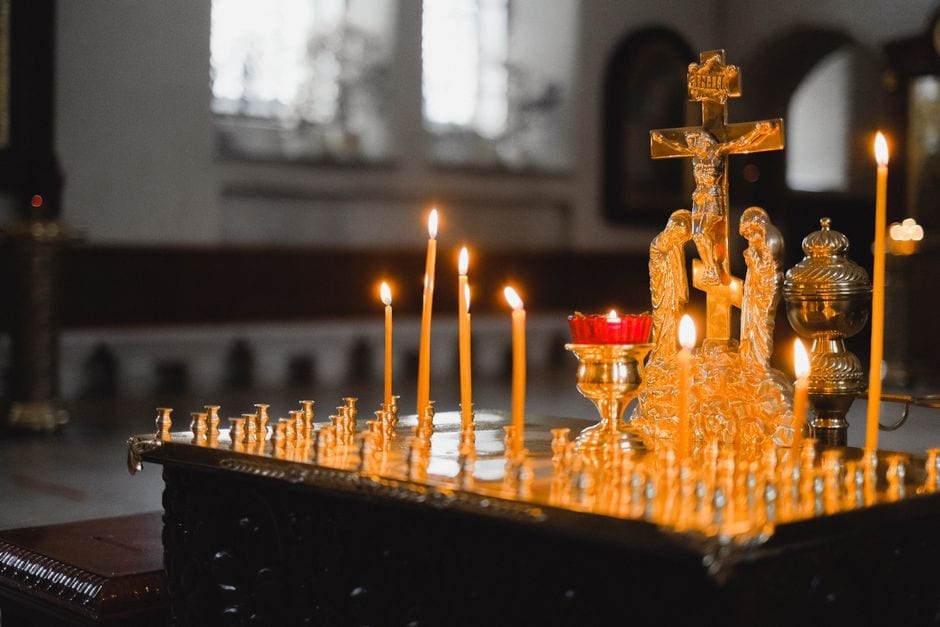
Photo by Anna Shvets on Pexels |
0 Comments
Join the conversation
Be the first to comment
Share your thoughts above.