
St. James the Less: The Quiet Apostle Who Held the Early Church Together |
He barely speaks in the Gospels, yet he led the Church in Jerusalem, settled its first great crisis and died praying for the men who killed him. |
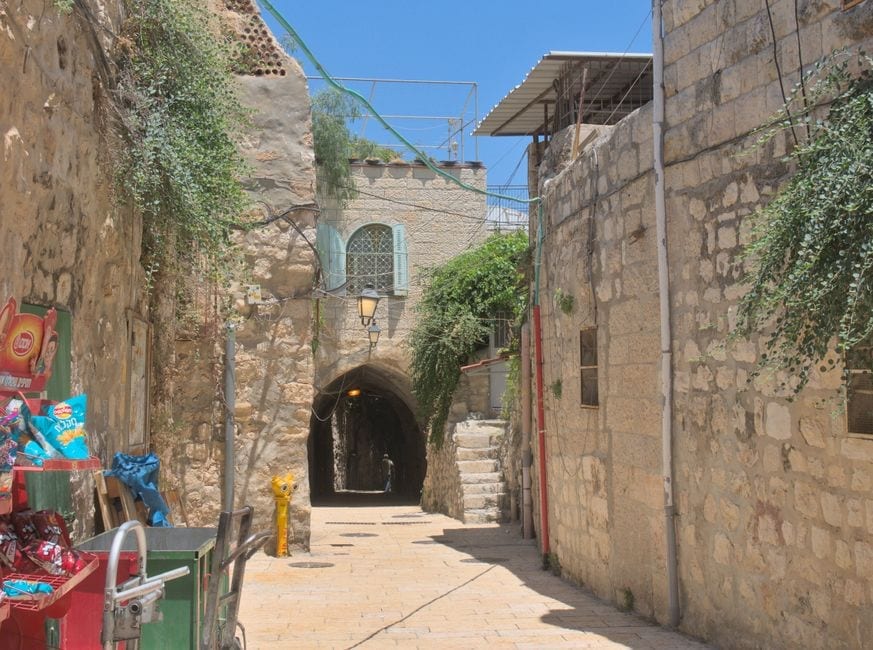
Jerusalem, around the year 62.
The Roman governor Festus was dead.
His replacement was still on the road.
For a brief window, Rome had no governor in the province.
And the high priest, a man named Ananus, saw his chance.
He gathered the Sanhedrin.
He brought before them the leader of the Christians in Jerusalem, along with several others.
The charge was breaking the Law.
The sentence was death by stoning.
The man at the center of it all was called James.
Christians had a nickname for him.
They called him "the Just."
And the Church remembers him today as St. James the Less.
The Apostle in the Background
If you have ever read the lists of the Twelve Apostles, you have seen his name.
"James the son of Alphaeus."
It appears in Matthew, Mark, Luke and Acts.
And then, in the Gospels, he almost disappears.
He asks no famous question.
He walks on no water.
He makes no bold promise at the Last Supper.
That is part of why he is called "the Less."
Mark's Gospel mentions a "James the younger," whose mother Mary stood near the cross.
Tradition connected that James with the apostle, and the Latin title stuck.
It probably meant younger, or shorter, not less important.
Because what happened to this quiet man after the Resurrection was anything but small.
"The Brother of the Lord"
Here is where the story gets fascinating, and a little complicated.
Catholic tradition has long identified James the son of Alphaeus with another James in the New Testament, the one St. Paul calls "the brother of the Lord."
In the ancient world, "brother" could describe a cousin or close relative, and many Church Fathers, including St. Jerome, understood it that way.
Many scholars today debate whether these two Jameses were really one man.
The Church has not settled every detail of that question, and the Roman calendar honors the apostle while drawing on the traditions of James of Jerusalem.
What the New Testament tells us about James of Jerusalem is remarkable.
St. Paul writes that the risen Jesus appeared to James.
Paul also calls him one of the "pillars" of the Church, alongside Peter and John.
When Paul first visited Jerusalem after his conversion, he met with Peter, and the only other apostle he saw was James.
The Man Who Settled the First Great Crisis
Around the year 50, the young Church faced a question that could have split it in two.
Gentiles were becoming Christians in growing numbers.
Did they have to be circumcised and keep the whole Law of Moses?
Some believers said yes.
Paul and Barnabas said no.
The argument grew so heated that the apostles and elders met in Jerusalem to decide it.
Peter spoke first, reminding them that God had already poured out the Holy Spirit on Gentiles.
Then, according to Acts 15, James stood up.
He quoted the prophets.
He proposed a solution.
Gentile believers would not be burdened with the full Law, but would be asked to avoid a few practices that would scandalize their Jewish brothers and sisters.
The assembly agreed.
A letter went out to the churches.
The crisis passed.
The quiet apostle had helped keep the Church together.
Years later, when Paul returned to Jerusalem at the end of his third missionary journey, Acts says he went straight to see James, and all the elders were there.
James was clearly the leader of the Jerusalem church.
Ancient tradition calls him its first bishop.
A Letter That Still Stings
The New Testament contains a short, blunt letter that bears his name: the Epistle of James.
Catholic tradition attributes it to this James.
It does not read like a theology lecture.
It reads like a pastor who has seen too much hypocrisy.
It warns against showing favor to the rich man in fine clothes while telling the poor man to sit on the floor.
It warns that the tongue is a small fire that can set a whole forest ablaze.
And it says that faith without works is dead.
It is also the letter the Church points to for the Anointing of the Sick, telling the sick to call the elders of the Church to pray over them and anoint them with oil.
Two thousand years later, it still reads like it was written for this week.
Knees Like a Camel's
Early Christian writers left a vivid portrait of him.
A second-century writer named Hegesippus, whose words were preserved by the historian Eusebius, described James as a man of intense holiness and prayer.
He wrote that James spent so long kneeling in the Temple, praying for forgiveness for the people, that his knees grew hard like a camel's.
Even many who did not follow Jesus respected him.
That is likely why they called him "the Just."
Hegesippus may have added legendary color to his account.
But the picture is consistent: a man known for prayer, not power.
The Martyrdom
Now we come back to that gap in Roman rule.
The Jewish historian Josephus, who was not a Christian, recorded what happened in his Antiquities of the Jews.
He wrote that Ananus convened the Sanhedrin and brought before it "the brother of Jesus, who was called Christ, whose name was James," along with others, and had them stoned.
That brief mention is one of the earliest references to Jesus outside the Bible.
Josephus adds that many fair-minded people in the city were outraged.
They complained to the new governor and to King Agrippa II.
Ananus was removed from office after only three months as high priest.
Hegesippus tells a more dramatic version.
In his account, James was taken to a high point of the Temple and urged to turn the crowd away from Jesus.
Instead, he proclaimed Christ.
He was thrown down, then stoned.
Still alive, he knelt and prayed for those killing him, echoing the words of Jesus on the cross.
Then a man struck him with a club used for beating cloth, and he died.
Historians treat the details of Hegesippus with caution.
But the heart of it matches Josephus.
James died in Jerusalem, around the year 62, for refusing to deny Christ.
That is why Christian art often shows him holding a club.
The Church celebrates St. James the Less together with St. Philip on May 3.
Relics associated with both apostles rest in the Basilica of the Holy Apostles in Rome.
It is easy to overlook him.
He never had the big Gospel moments.
But when the early Church needed a steady hand, he was there.
When the poor were being ignored, he wrote about it.
When the crowd demanded he deny Jesus, he prayed for them instead.
Some saints are remembered for what they said in the spotlight, and James is remembered for how faithfully he lived outside of it.
Maybe that is the kind of holiness most of us are actually called to.
Not famous.
Just faithful.
Day after day.
On our knees.
Your turn: Who is the quiet, faithful person in your life who taught you what real faith looks like? Share your story in the comments below.
Photo by Pálosi Ákos on Pexels |
0 Comments
Join the conversation
Be the first to comment
Share your thoughts above.