
The Day 70,000 People Watched the Sun Dance in the Sky |
Three shepherd children promised a miracle at noon. On October 13, 1917, a soaked crowd at Fatima looked up and never forgot what they saw. |
It had been raining since the night before.
Cold, hard rain, soaking through wool coats and turning the fields to mud.
And still they came.
On foot, on donkeys, in carts and cars, tens of thousands of people poured into a bowl-shaped pasture in rural Portugal called the Cova da Iria.
Farmers and their families.
Priests and skeptics.
Reporters sent to watch the whole thing collapse.
It was October 13, 1917.
Three shepherd children had promised a miracle at noon.
Three Children and a Lady
The story had started five months earlier, on May 13, 1917.
Lúcia dos Santos, about ten years old, and her younger cousins Francisco and Jacinta Marto were watching their family's sheep near the village of Fátima.
According to the children, a Lady brighter than the sun appeared above a small holm oak tree.
She asked them to pray the Rosary every day for peace in the world, which was then being torn apart by the First World War.
She asked them to return on the thirteenth of each month.
They did.
And each month, the crowds grew.
Not everyone was pleased.
Portugal's government at the time was fiercely anticlerical, and local officials saw the visions as superstition, or worse, a plot.
In August, the district administrator took the children into custody and tried to frighten them into recanting.
They refused.
The children said the Lady had promised something specific.
In October, she would perform a miracle so that all may believe.
Now the whole country was watching to see if three peasant children had made fools of themselves.
Noon in the Rain
By midday on October 13, the crowd was enormous.
Estimates vary, but most accounts place it in the tens of thousands, with figures of 50,000 to 70,000 often cited.
The rain kept falling.
Umbrellas filled the pasture like a dark sea.
Then, at the time the children had announced, Lúcia cried out for the people to look at the sun.
The clouds parted.
What happened next was described by thousands of people, believers and unbelievers alike.
The sun appeared as a pale, silver disc that many said they could look at without pain.
It seemed to tremble and spin.
Some reported colors washing over the crowd and the landscape, as if the light itself had changed.
Then, many said, the sun appeared to break loose from the sky and plunge toward the earth.
People screamed.
Some fell to their knees in the mud and begged God for mercy.
And then, just as suddenly, the sun returned to its place.
It lasted a matter of minutes.
Then the crowd stood there, stunned, in the sudden quiet.
Many witnesses later said something else that astonished them.
Their clothes, soaked to the skin moments earlier, were dry.
The Reporter Who Came to Mock
One of the most important witnesses was not a pious villager.
He was Avelino de Almeida, a journalist for O Século, a major Lisbon newspaper with no love for the Church.
Before the event, his paper had treated the whole affair with scorn.
Afterward, Almeida published a detailed account of what he saw in the crowd: the shouts, the tears, the thousands of faces turned to the sky, and the strange behavior of the sun that so many described.
He did not claim to explain it.
But he did not pretend it had not happened.
Other witnesses reported seeing the phenomenon from villages miles away, people who had not gone to the Cova at all.
What the Church Has Said
Here it is important to be careful, because the Church herself is careful.
After years of investigation, the Bishop of Leiria, José Alves Correia da Silva, declared on October 13, 1930, that the visions of the children were worthy of belief, and he officially permitted devotion to Our Lady of Fátima.
That is the Church's formal approval of an apparition.
It means the Church found nothing contrary to faith or morals and judged the events credible.
It does not make Fátima a dogma.
Like all approved apparitions, it is what the Church calls a private revelation.
Catholics are free to believe it, and many popes have embraced it, but no one is required to.
The Church has also never claimed that science has proven the sun moved.
Skeptics have offered natural explanations: the effects of staring at the sun, unusual atmospheric conditions, or the power of suggestion in a crowd primed to see a wonder.
Believers point out that the event happened at the time the children foretold, before a hostile press, and was described in strikingly similar terms by people who had no reason to agree.
Both sides are still talking more than a century later.
Perhaps that is part of the point.
What Happened to the Children
The children's lives after that day were short, or long and hidden.
Francisco died in 1919 and Jacinta in 1920, both victims of the great influenza pandemic, both very young.
Pope Francis canonized them in Fátima on May 13, 2017, the hundredth anniversary of the first apparition.
They are among the youngest non-martyrs ever declared saints.
Lúcia became a religious sister and later a Carmelite nun.
She lived until 2005, praying, writing her memoirs, and quietly insisting that the heart of Fátima was not the sun at all.
It was the message.
Pray the Rosary.
Turn back to God.
Make sacrifices for sinners.
A Pope, a Bullet and a Crown
Fátima's story did not end in 1917.
On May 13, 1981, the anniversary of the first apparition, Pope John Paul II was shot in St. Peter's Square.
He was gravely wounded and very nearly died.
He survived, and he became convinced that the Mother of God had protected him that day.
A year later, he traveled to Fátima to give thanks.
One of the bullets that struck him was later set into the crown of the statue of Our Lady of Fátima, where it remains.
For John Paul II, Fátima was not a curiosity from the past.
It was personal.
The Message Behind the Miracle
It is easy to get lost in the spectacle.
A spinning sun.
A terrified crowd.
Dry clothes in a drenched field.
But Fátima was never meant to be a show.
The children said the Lady came with a plea for peace, in the middle of a war that had already swallowed millions of young men.
She asked for prayer, conversion and penance from ordinary people.
Farmers.
Shepherds.
Families like yours and mine.
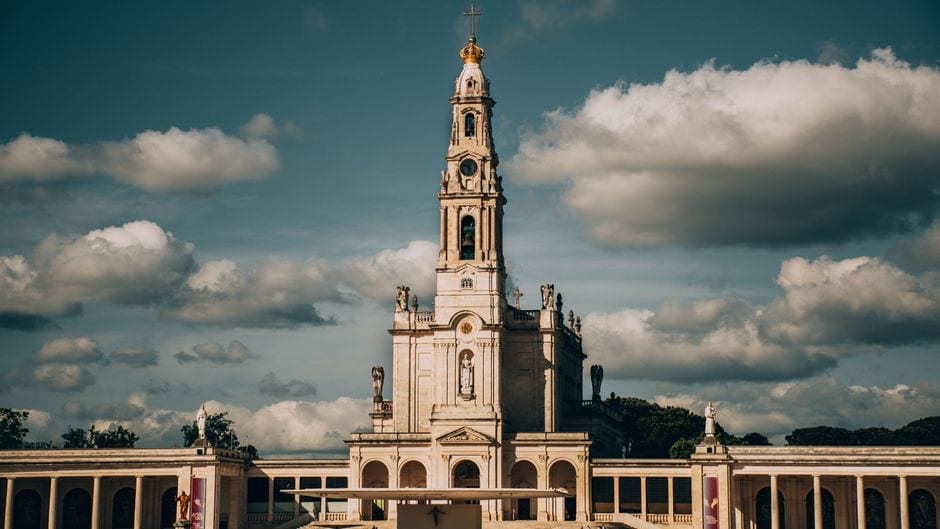
Today, millions of pilgrims visit the Sanctuary of Fátima, where the little holm oak once stood, and popes from Paul VI to Francis have prayed there.
They do not go to see the sun dance again.
They go to pray the Rosary.
That was always the real miracle the Lady asked for.
Your turn: What role does the Rosary play in your life, and has it ever carried you through a dark time? Share your story in the comments below.
Photo by Diogo Cacito on Pexels |
0 Comments
Join the conversation
Be the first to comment
Share your thoughts above.