
What Becoming Catholic Taught Me About Life |
A retired English teacher who became Catholic at seventy-one, and the lessons she wishes she'd learned sooner |
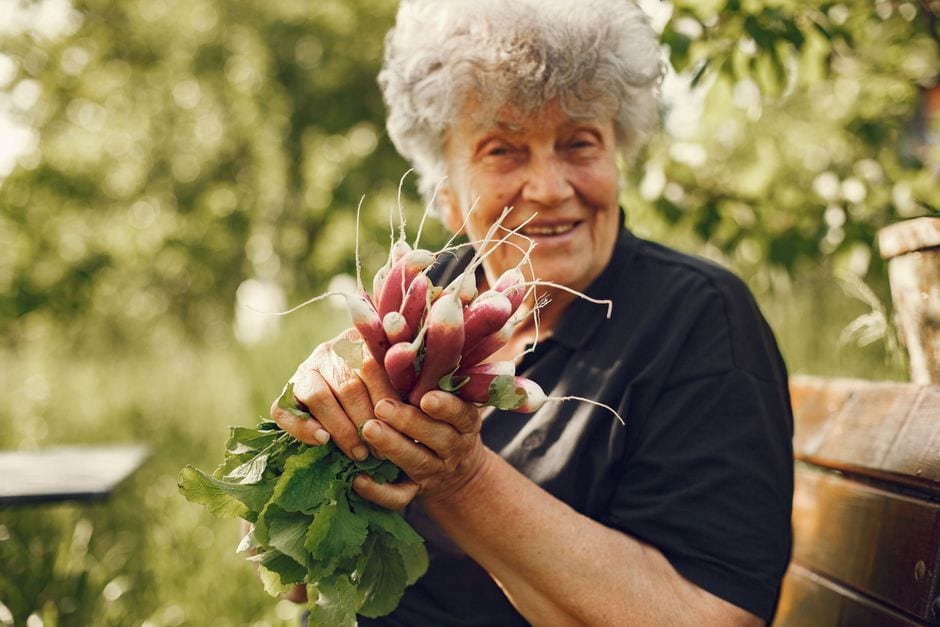
I became Catholic at seventy-one years old.
People usually raise their eyebrows when I tell them that.
A few have asked, kindly, why I bothered at my age.
I understand the question.
I was a devoted Lutheran for seventy years.
I taught high school English for thirty-four.
I had read most of the great books and buried most of the people I loved.
I thought I had learned what life had to teach me.
I was wrong.
I want to start by saying I am grateful for my Lutheran upbringing.
It gave me a deep love of Scripture and some of the most beautiful hymns ever written.
But it was in the Catholic Church that I learned the lessons I needed most, late in life, when I needed them most of all.
How It Began
My husband, George, was diagnosed with Parkinson's disease when he was sixty-nine.
For six years, I watched the strongest man I knew slowly lose his steadiness, then his voice, then his independence.
I became his nurse, his driver, his cook, and his memory.
Our neighbor, Rosa, was Catholic.
She came over twice a week to sit with George so I could run errands.
And every time she left, she'd squeeze my hand and tell me to offer it up.
I had no idea what she meant.
I finally asked her.
That question started everything.
Lesson One: Suffering Is Not Wasted
Rosa explained that Catholics believe suffering, joined to the suffering of Christ on the cross, can become a prayer.
It's called redemptive suffering.
Saint Paul wrote about it in his letter to the Colossians, saying he rejoiced in his sufferings for the sake of the Church.
I had read that verse a hundred times and never understood it.
Rosa said that when I was exhausted at two in the morning helping George to the bathroom, I could offer that exhaustion to God for someone who needed grace.
I tried it that very night.
I offered my aching back for my estranged sister.
Nothing visible happened.
But something in me changed.
My suffering stopped being a meaningless weight.
It became a gift I could give.
For the first time in years, I didn't feel useless.
Lesson Two: Time Is Holy
After George moved into a care facility, I started going to daily Mass at Rosa's parish.
I just wanted somewhere to be in the mornings.
What I found was a whole different way of living in time.
The Church doesn't just mark Christmas and Easter.
It walks through the whole year as a story.
Waiting in Advent.
Rejoicing at Christmas.
Repenting in Lent.
Exploding with joy at Easter.
And every single day has a saint, a feast, a reason.
As a widow-in-waiting, the days had started to blur together.
The Church gave them shape again.
Every day became a day that meant something.
Lesson Three: The Body Matters
I spent my whole life thinking of faith as mostly something in my head.
Believe the right things.
Read the right passages.
Catholicism surprised me by how physical it is.
You kneel.
You make the sign of the cross.
You touch holy water and smell incense and receive God Himself on your tongue.
The sacraments work through ordinary things, water, oil, bread, wine, and human hands.
At first it felt foreign to me.
Then I watched a priest anoint George's trembling hands with oil, and I understood.
God became flesh.
Of course He reaches us through our bodies.
Even a body that is failing.
Especially a body that is failing.
Lesson Four: Small Things Matter Most
Rosa gave me a worn paperback of Saint Thérèse of Lisieux.
She was a young French nun who died at twenty-four and never did anything the world would call important.
She never left her convent.
She wrote no great theology.
And yet she was declared a Doctor of the Church.
Her secret was what she called her little way.
Doing ordinary, small things with great love.
Smiling at a sister who irritated her.
Accepting blame she didn't deserve without complaint.
I read that book at George's bedside while he slept.
I realized my whole life had become small things.
Spooning applesauce.
Rubbing lotion on his hands.
Reading him the sports page, even though he couldn't follow it anymore.
Thérèse taught me those weren't distractions from a holy life.
They were the holy life.
Lesson Five: Death Is Not the End of Love
George died in his sleep on a Tuesday in February.
I was holding his hand.
I had prayed the Rosary beside his bed that evening, the way Rosa taught me.
In my old church, I believed George was in God's hands, and I still do.
But the Catholic Church gave me something more.
It gave me a way to keep loving him.
Catholics pray for the dead.
We have Masses offered for them.
We believe the whole family of God, living and dead, is still connected in Christ.
Every Sunday, I still get to do something for George.
I pray for him.
And I believe he prays for me.
Lesson Six: It Is Never Too Late
I was received into the Church at the Easter Vigil fourteen months after George died.
I was the oldest person in my class by about forty years.
Rosa was my sponsor.
When I was confirmed, I took the name Thérèse.
The young people in my class called me Grandma Ellen.
I loved it.
Jesus told a parable about workers who were hired at the very last hour of the day and received the same wage as everyone else.
I always thought that story was about fairness.
Now I know it's about generosity.
I came in at the last hour.
He welcomed me anyway.
What I'd Tell You
I'm seventy-four now.
I still teach, a little.
I help with the adult classes at my parish, mostly by telling nervous forty-year-olds that if an old woman can learn when to kneel, so can they.
If you take one thing from my story, let it be this.
Your suffering matters.
Your small days matter.
Your body, your time, your love for the people you've lost, all of it matters to God.
And no matter how late the hour, He is still hiring.
Ellen is a composite character, and this story is illustrative, inspired by the real journeys of many people who have become Catholic later in life. |
Your turn: What has your faith taught you about suffering, time, or the little things in life? Tell us in the comments below. |
0 Comments
Join the conversation
Be the first to comment
Share your thoughts above.